Reliable support
Fast support, warranty service and easy returns. Lifetime guarantee on our wooden products.
Learn how to choose a hiking or camping water purifier by capacity, weight, speed, source conditions, cartridge life, and group size.
All GRAYL guides
Choose an outdoor water purifier for the route you will actually walk: the available water sources, how much water you need at each stop, who will share it and how much weight you want to carry. It should be easy to use throughout the trip.
GRAYL’s press-style bottles are designed to treat freshwater without a pump, hose, battery, or chemical wait time. The two core sizes are the 710 ml GeoPress and the 500 ml UltraPress.
Choose GeoPress for 710 ml per cycle when you want fewer presses, fill another container, or share treated water.
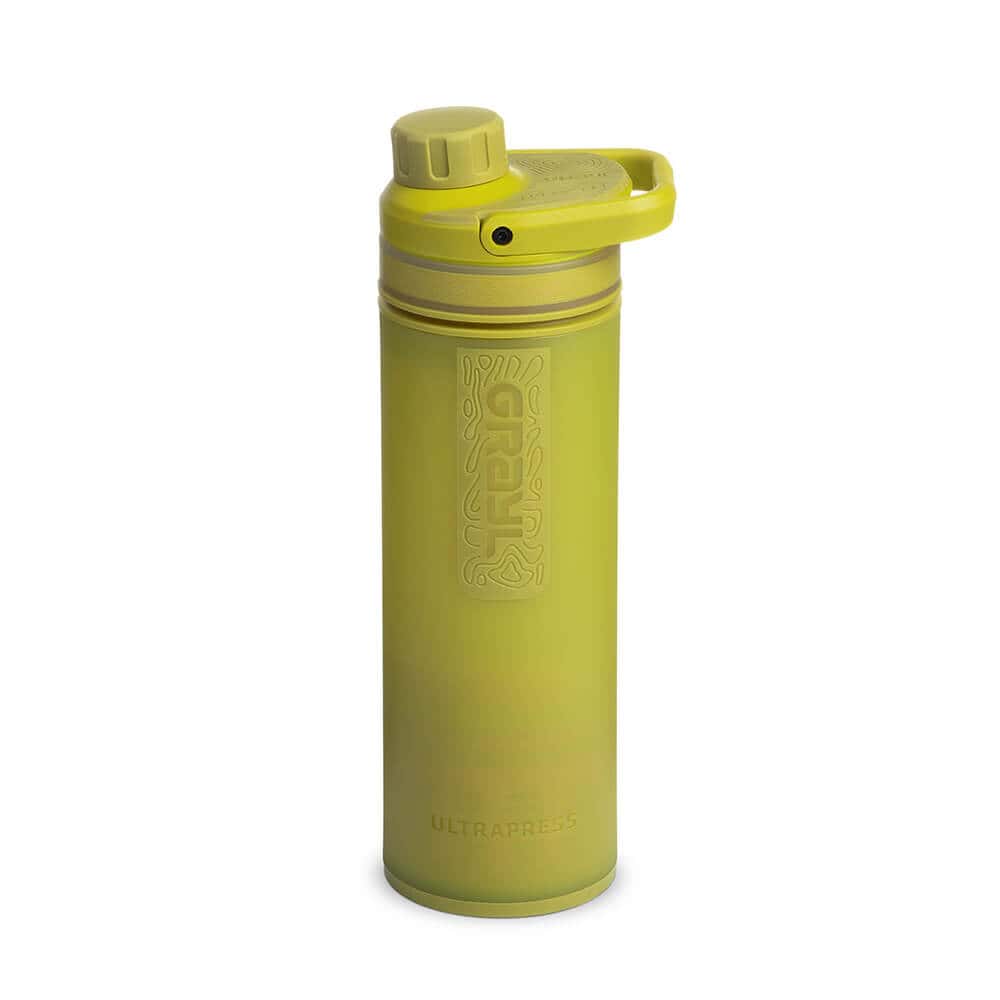
Choose UltraPress for 500 ml per cycle when compact size and lower weight matter more.
A purifier bottle is most useful when freshwater sources are available along the route. If the route has long dry sections, purification does not replace the need for sufficient carrying capacity.
Clear, moving freshwater is preferable to silty or tannin-rich water. Sediment increases pressing effort and reduces cartridge life. A clean cloth can pre-filter visible particles, but it does not replace purification.
A solo hiker may prefer UltraPress. A couple, family, or camp team may value GeoPress’s extra 210 ml per press. For a larger group, calculate the number of cycles and consider whether a higher-volume camp treatment system belongs in the kit as well.
The titanium models add a heat-compatible outer cup:
Remove the purifier components before using the titanium outer cup for heating or cooking, and follow the product instructions.
|
Model |
Capacity |
Weight |
Approx. cycle |
Cartridge rating |
Best outdoor fit |
|---|---|---|---|---|---|
|
Standard UltraPress |
500 ml |
354 g |
10 s |
300 cycles / 150 l |
Solo hiking, compact pack, frequent refills |
|
UltraPress Ti |
500 ml |
400 g |
10 s |
300 cycles / 150 l |
Compact purification plus a titanium camp cup |
|
Standard GeoPress |
710 ml |
450 g |
8 s |
350 cycles / 250 l |
Longer days, sharing, filling another bottle |
|
GeoPress Ti |
710 ml |
570 g |
8 s |
350 cycles / 250 l |
Higher capacity plus a titanium cup for cooking |
Cartridge ratings are maximum published figures. Source-water quality, especially silt, sediment, and tannins, affects real-world lifespan.
Check local restrictions and water advisories.
Select the clearest freshwater source available.
Scoop from below floating debris without disturbing the bottom.
Pre-filter visible sediment when needed.
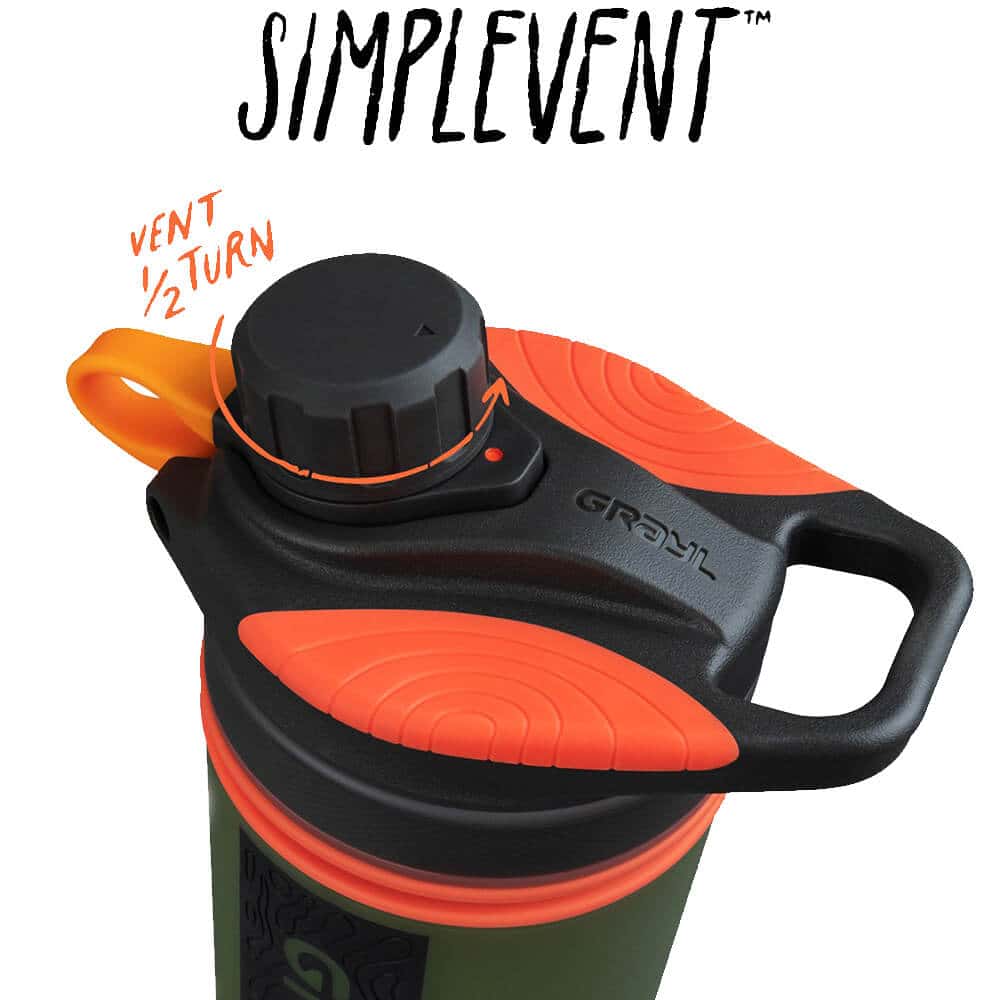
Fill to the marked line, vent, and press with steady body weight.
Keep dirty-water surfaces away from the clean drinking spout.
After the trip, perform the recommended dry press, remove the cartridge, and let it air-dry fully before storage.
Many outdoor products use the words “filter” and “purifier” inconsistently. Compare the stated performance rather than the label alone.
GRAYL publishes removal rates for viruses, bacteria, and protozoan cysts, plus filtration of particulates such as sediment and microplastics. Its activated carbon also reduces many chemicals, heavy metals, flavours, and odours. That broader scope is relevant for international travel and varied freshwater sources, where virus performance may be part of the decision.
These bottles do not desalinate seawater or brackish water. They are not designed for industrial spills, mining or agricultural disasters, extreme chemical contamination, nuclear incidents, or toxic blue-green algae. When a source falls outside the product’s published use, move to another source rather than attempting to “press through” the risk.
Technical figures and operating limits on this page are based on GRAYL's published specifications and instructions:
These are manufacturer-published benchmarks, not a guarantee for every source. Press time and cartridge life vary with water quality, sediment, temperature, cartridge age, and user technique. Use suitable freshwater only: GRAYL cartridges do not desalinate salty or brackish water and are not intended for industrial spills, extreme chemical contamination, nuclear incidents, or toxic blue-green algae. Follow local advisories and choose another source when conditions exceed the manufacturer's guidance.
purifier bottle matched to your group size;
compatible spare cartridge for extended or remote trips;
separate storage capacity for dry sections;
clean cloth for sediment pre-filtering;
product quick-start instructions;
a backup treatment method appropriate to the route;
route-specific water information and local advisories.
UltraPress is smaller and lighter; GeoPress treats more water per cycle. Solo fast-and-light hikers often favour UltraPress, while hikers who share water or want fewer cycles may prefer GeoPress.
For a weekend near reliable resupply, it may not be necessary. For a long, remote, or multi-country trip, a sealed compatible spare reduces dependence on uncertain local availability.
Choose the clearest water available and pre-filter visible sediment. Heavy sediment makes pressing harder and shortens cartridge life. Being able to press the water through does not mean the source is suitable.
No. A purifier helps where freshwater is available; it does not create water on dry routes.
Fast support, warranty service and easy returns. Lifetime guarantee on our wooden products.
Over 7400 reviews from customers from all around the World. 98% customers recommend us.
68travel is an original manufacturer which means we can create personalised orders quickly.
At 68travel we love to travel and explore. We strive to use recycled natural materials and reduce plastic usage. 68travel around the World »
Search