Reliable support
Fast support, warranty service and easy returns. Lifetime guarantee on our wooden products.
Compare a GRAYL purifier with standard filter bottles by microorganism claims, activated carbon, operation, capacity, maintenance, and limits.
All GRAYL guides
“Filter bottle” and “purifier bottle” are not enough to tell you what a product does. The useful comparison is the published performance: which microorganisms and contaminants are addressed, how the water moves through the system, how quickly it treats a batch, and what limitations remain.
GRAYL’s defining difference is a press-style cartridge with published performance against viruses, bacteria, and protozoan cysts, combined with activated-carbon filtration for particulates, taste, odour, and a range of chemicals and heavy metals.
|
Question |
GRAYL press purifier |
Standard filter bottle |
|---|---|---|
|
Virus claim |
GRAYL publishes a 99.99% removal claim |
Varies; many products do not publish a virus claim |
|
Bacteria and protozoa |
Published removal claims |
Common in outdoor filters, but performance varies |
|
Particulates |
Filters sediment and microplastics |
Common, depending on media and pore design |
|
Taste and odour |
Ultra-powdered activated carbon |
Often included, but amount and purpose vary |
|
Operation |
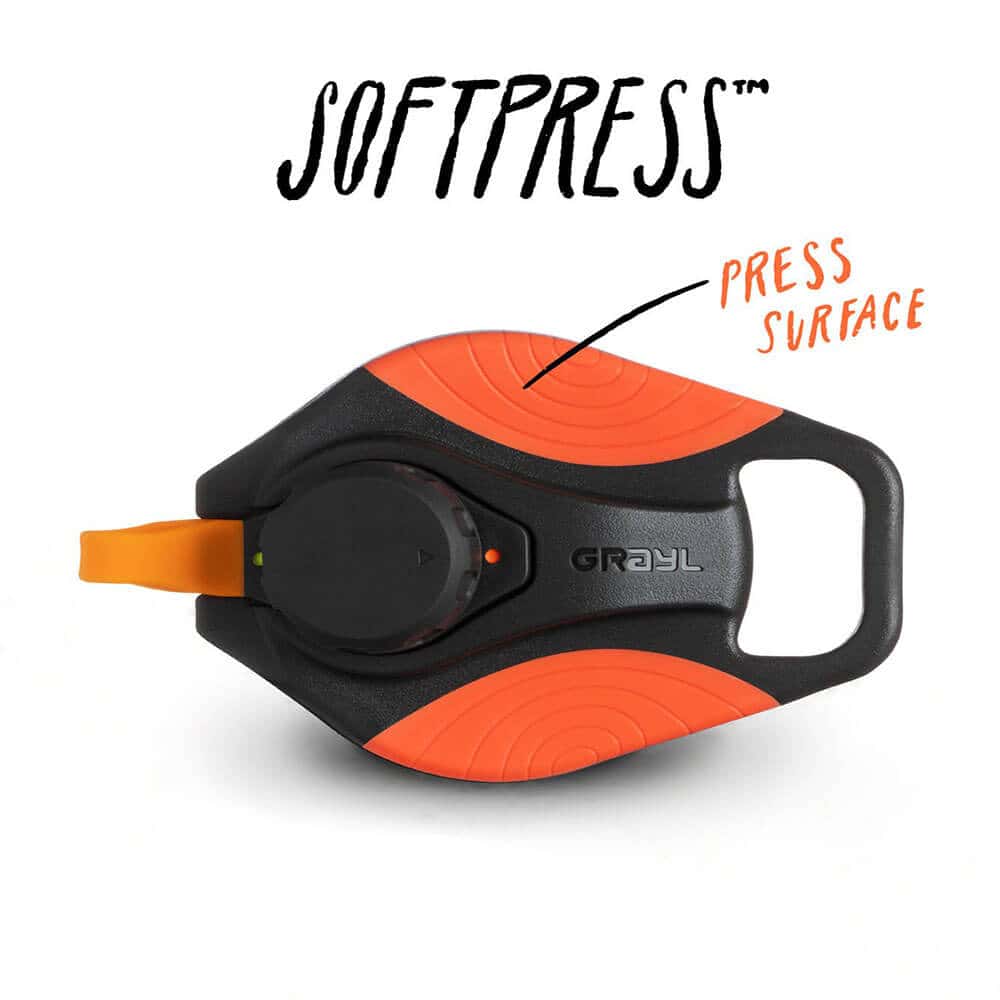
Fill an outer cup and press a batch |
Often drink-through, squeeze, gravity, or pump |
|
Batch size |
500 ml UltraPress or 710 ml GeoPress |
Varies |
|
Consumable |
Family-specific replaceable cartridge |
Product-specific filter or cartridge |
|
Main trade-off |
Requires pressing and periodic cartridge replacement |
May have narrower claims, slower drinking flow, or other maintenance |
A standard filter bottle can suit your route well. Choose according to the water sources you expect and the product’s verified performance.
Many hiking filters are designed around bacteria and protozoa. That can be appropriate for particular backcountry contexts. International travel and mixed human-impacted water sources may lead buyers to look for a product with a published virus-removal claim as well.
GRAYL states removal rates of:
99.99% of viruses;
99.9999% of bacteria;
99.9% of protozoan cysts.
Those figures are product claims tied to specified testing. They do not turn seawater, industrial waste, or every visibly contaminated source into suitable drinking water.
treats a measured batch in about 8–10 seconds;
no battery, UV lamp, hose, or chemical wait time;
treated water remains in the Inner Press;
easy to pour into another bottle;
replaceable cartridges keep the main bottle in use.
pressing needs a stable surface or controlled body weight;
effort increases as the cartridge loads;
sediment shortens cartridge life;
500 ml or 710 ml batches may require repeated cycles for a group;
the correct replacement cartridge must match the bottle family.
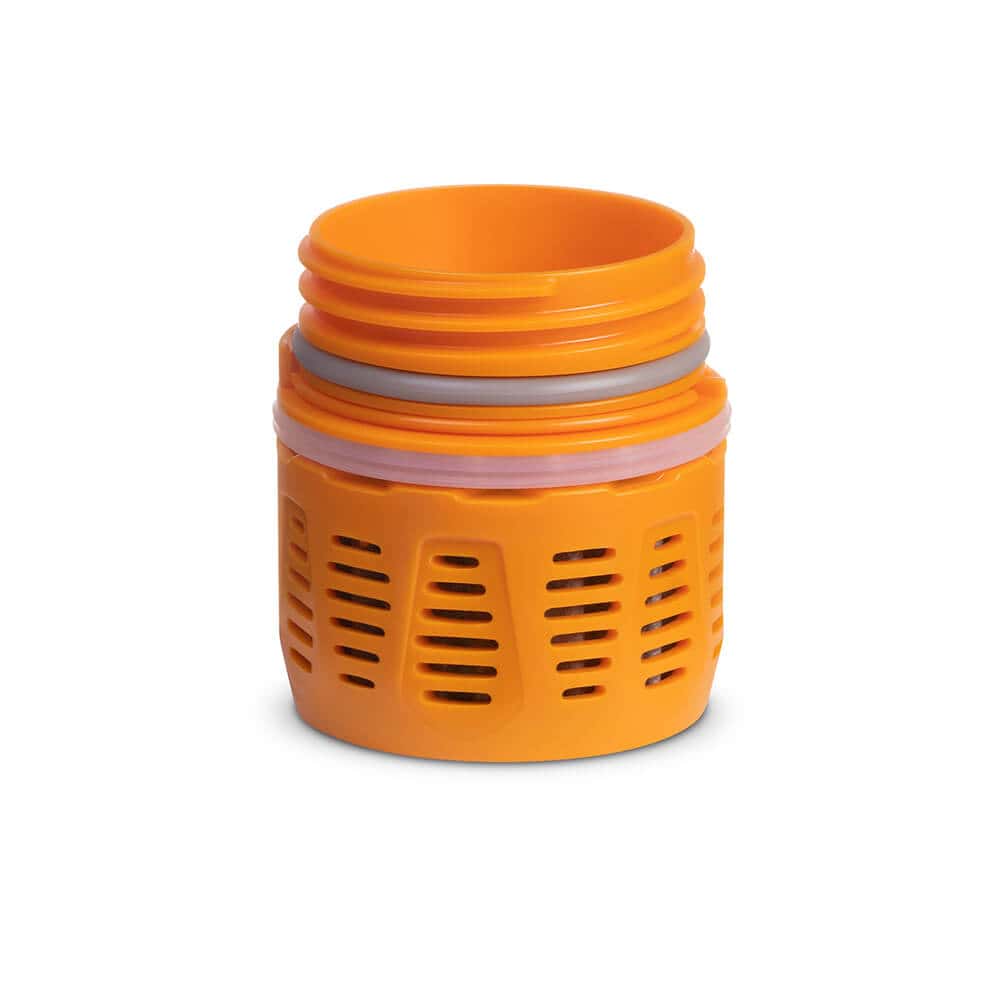
Activated carbon is relevant to taste and odour and to reducing many chemicals and heavy metals within the product’s published scope. It is not a universal solution for extreme chemical contamination. Compare how each candidate product describes its carbon stage and testing rather than assuming every carbon filter performs identically.
Does it publish performance against viruses, bacteria, and protozoa?
Is the claim removal, reduction, or taste improvement?
Which independent protocols or standards are referenced?
How much water does it treat per cycle?
What is the clean-water flow or treatment time?
What shortens consumable life?
How do you know when replacement is due?
Can you buy the exact replacement locally?
What water sources are explicitly excluded?
Can the clean side be protected from cross-contamination?
UltraPress 500 ml: compact, 354 g, about ten seconds.
GeoPress 710 ml: more water per cycle, 450 g, about eight seconds.
Titanium versions: same family capacities with a heat-compatible outer cup.
GRAYL purifiers are designed for freshwater. They do not desalinate salt or brackish water and are not intended for industrial spills, extreme chemical contamination, nuclear incidents, or toxic blue-green algae. No bottle should be used as a reason to ignore an official water warning.
Technical figures and operating limits on this page are based on GRAYL's published specifications and instructions:
These are manufacturer-published benchmarks, not a guarantee for every source. Press time and cartridge life vary with water quality, sediment, temperature, cartridge age, and user technique. Use suitable freshwater only: GRAYL cartridges do not desalinate salty or brackish water and are not intended for industrial spills, extreme chemical contamination, nuclear incidents, or toxic blue-green algae. Follow local advisories and choose another source when conditions exceed the manufacturer's guidance.
No. “Purifier” describes a performance scope, not suitability for every trip. A lighter filter may fit a known backcountry hazard; a broader purifier may fit mixed or international contexts.
No. GRAYL publishes reduction claims for many chemicals and heavy metals within its tested scope, and lists conditions for which the purifier is unsuitable.
No. UV, chemical treatment, membrane filtration, activated carbon, and electroadsorption work differently. Some systems combine methods. Compare the complete performance and operating routine.
Yes. Treated water collects in the Inner Press, which has a drink spout. It can also be poured into another clean vessel.
Fast support, warranty service and easy returns. Lifetime guarantee on our wooden products.
Over 7400 reviews from customers from all around the World. 98% customers recommend us.
68travel is an original manufacturer which means we can create personalised orders quickly.
At 68travel we love to travel and explore. We strive to use recycled natural materials and reduce plastic usage. 68travel around the World »
Search